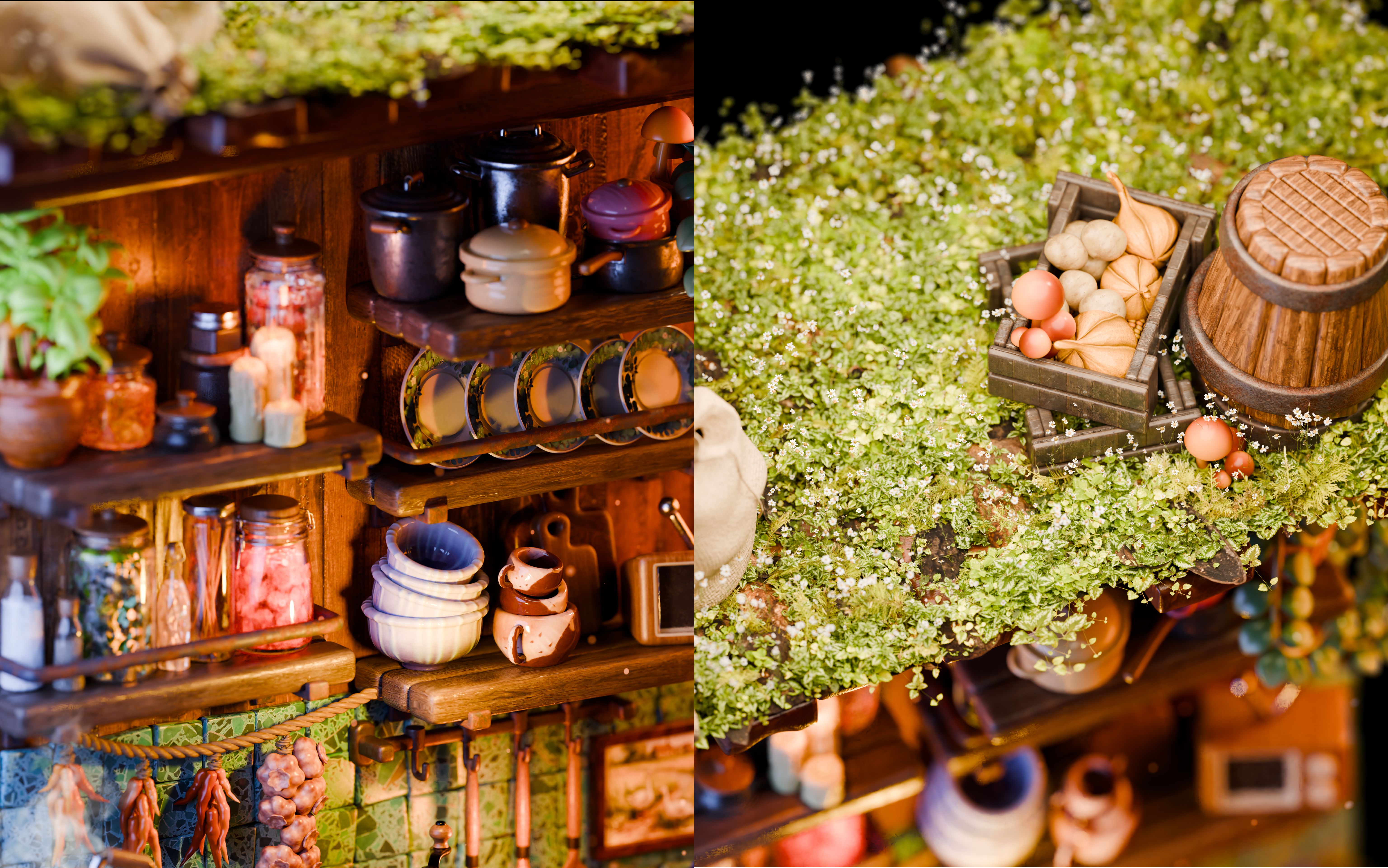
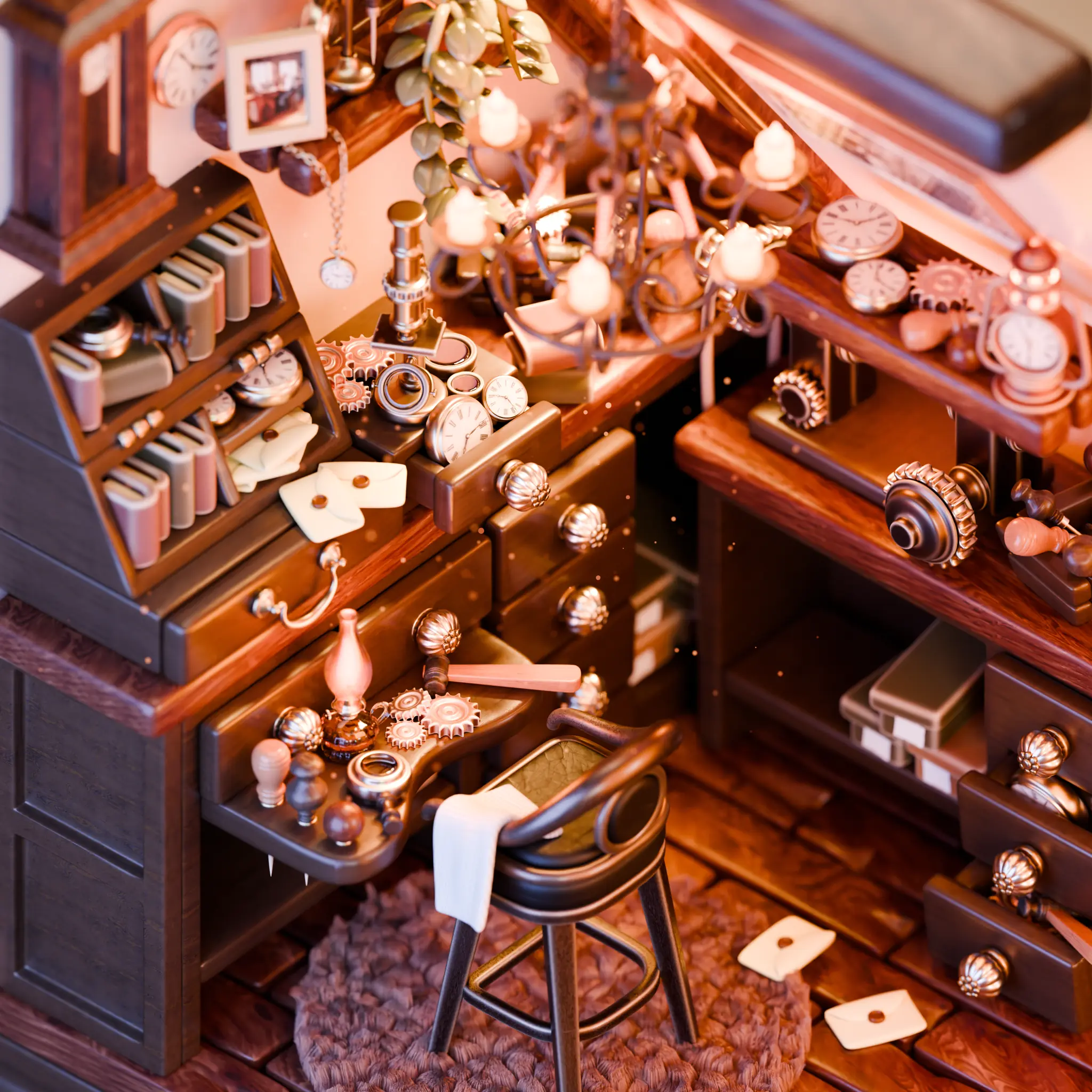
Games & interactive experiences
Environment concepts, locations, interiors, and visual targets that help guide art direction and production.
Services / 02
Explore the world before committing to production.
I develop stylized environment concepts using 3D as a flexible design tool, turning early ideas into clear visual directions that teams can evaluate, communicate, and build from.
Ideal for games, animation, original IP, pitches, pre-production, and environmental key art.
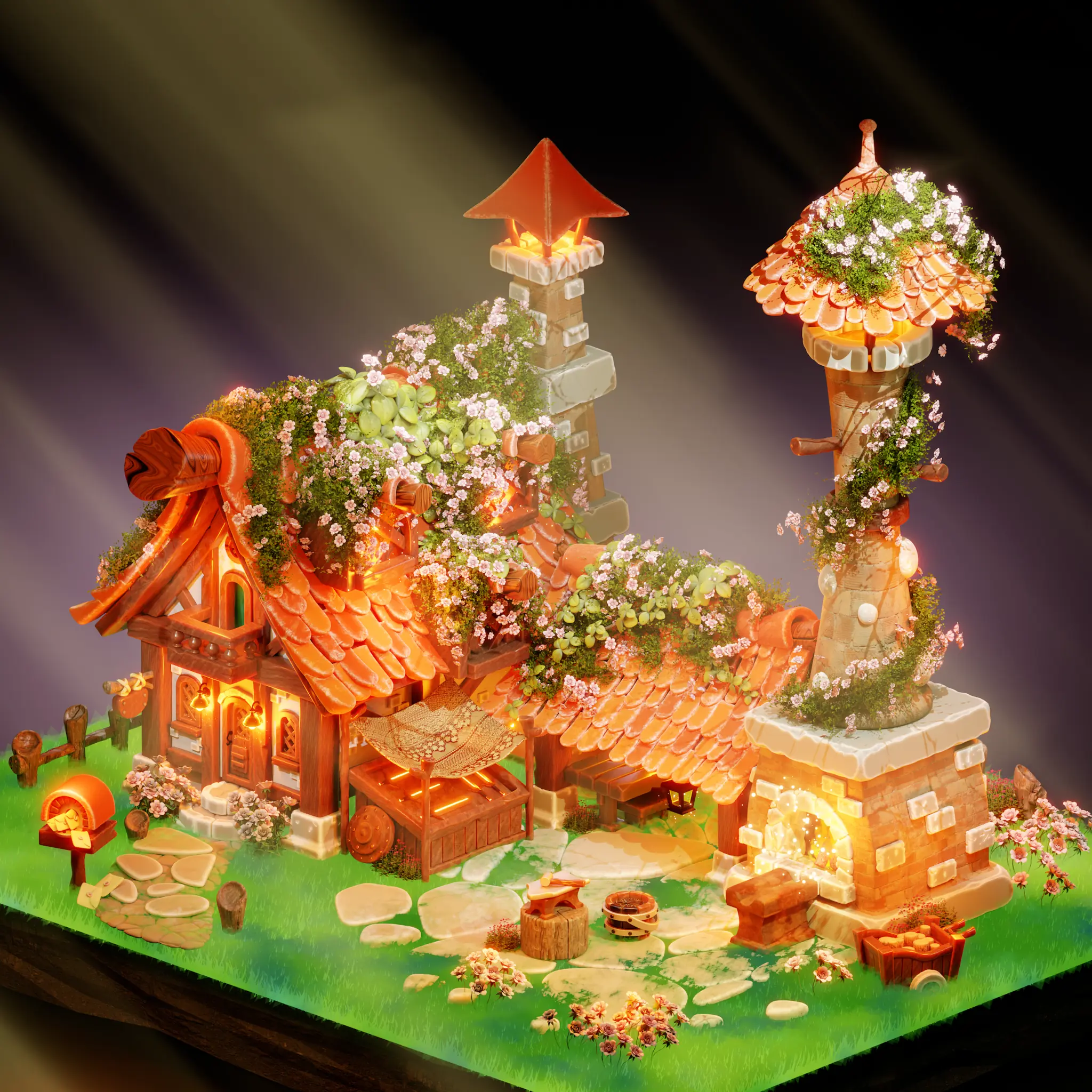
Service overview / Visual development
This service focuses on exploring and resolving the design of an environment before full production begins.
I use 3D to test spatial relationships, architecture, scale, composition, camera angles, storytelling details, materials, and atmosphere. Ideas can be evaluated from multiple viewpoints while maintaining consistent perspective and proportions.
The result is a clear visual foundation that helps creative teams align around the world’s design, mood, and production direction.
A good fit for / Project types
Environment concepts, locations, interiors, and visual targets that help guide art direction and production.
Spatial concepts and atmospheric key views for scenes that need clear composition, scale, lighting, and narrative intent.
Visual development for new worlds, stories, and creative properties that are still establishing their identity.
Polished environment imagery for presentations, funding decks, campaigns, publishing, and early project communication.
What’s included / Design exploration
The number of design directions, key views, and exploration rounds will be defined in the project scope before work begins.
Workflow / How the idea takes shape
We define the environment’s purpose, narrative context, visual goals, technical considerations, and required deliverables.
Focused references establish the mood, architecture, materials, shape language, color direction, and storytelling cues.
Simple 3D forms are used to explore scale, spatial relationships, composition, silhouettes, and potential camera angles.
The selected direction develops through architecture, environmental forms, hero props, functional details, and visual storytelling.
Color, materials, lighting, and atmosphere are explored to define the emotional tone and visual hierarchy of the world.
The approved concept becomes polished key images, supporting views, and design callouts based on the agreed scope.
Deliverables / What you’ll receive
Final concept images
Design & exploration
Optional 3D foundation
Concept models support design exploration and visual communication. Production topology, UVs, textures, optimization, and engine setup require a separately defined scope.
Core tools
Blender · Substance 3D Painter when material exploration is required · Marmoset Toolbag · Unreal Engine when appropriate for real-time presentation.
Related work / Worlds & visual development
Project brief / What to send
You do not need a fully developed brief. A rough idea, written description, or small collection of references can be enough to begin defining the direction.
FAQ / Before we start
3D Environment Concept Art focuses on exploring and resolving the design before full production begins. Stylized 3D Environments & Dioramas covers the complete creation of a finished environment, including production modeling, UVs, baking, texturing, lighting, rendering, and final delivery.
Yes. I can help organize references, establish the visual language, explore the space, and turn an early idea into a clear environment direction.
Yes. I can translate existing visual material into a spatial 3D concept while preserving its core design language. The client should have permission to use any third-party artwork supplied for the project.
This depends on the scope. The agreed number of directions, exploration rounds, and final views will be defined before production begins. Additional variations can be added when required.
Not by default. Concept geometry is built to support design decisions, composition, and presentation. Game-ready topology, UVs, textures, optimization, collision, and engine setup require a separate production scope.
Yes. Review checkpoints are included at important stages such as visual direction, blockout, design development, and final presentation. Major changes after a direction has been approved may affect the timeline and cost.
Yes. Once the design is approved, the project can continue through the Stylized 3D Environments & Dioramas service. The production scope and deliverables will be estimated separately.
Pricing depends on the number of locations, design directions, key views, exploration depth, and required level of polish. Projects can be handled at an hourly rate with an estimated range, or as a fixed estimate when the scope is clearly defined.
Start a project
Tell me about the setting, story, visual direction, and questions the concept needs to solve. I’ll review the idea and recommend an appropriate exploration scope.
Discuss your project Seoul, Korea · Working with clients worldwide